learn more
world and concept.
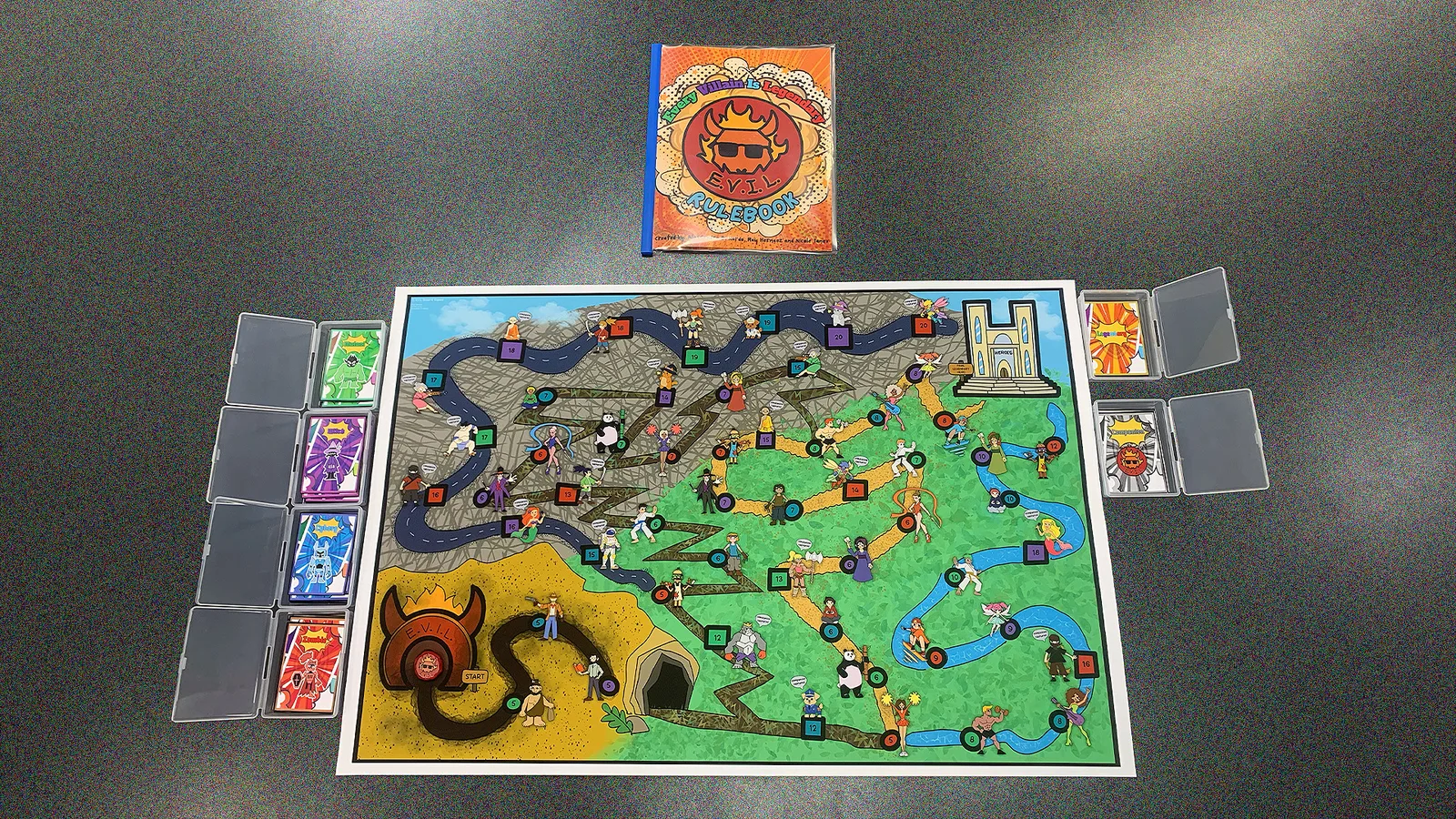
E.V.I.L., short for Every Villain Is Legendary, flips the usual hero story. Players take on villain roles
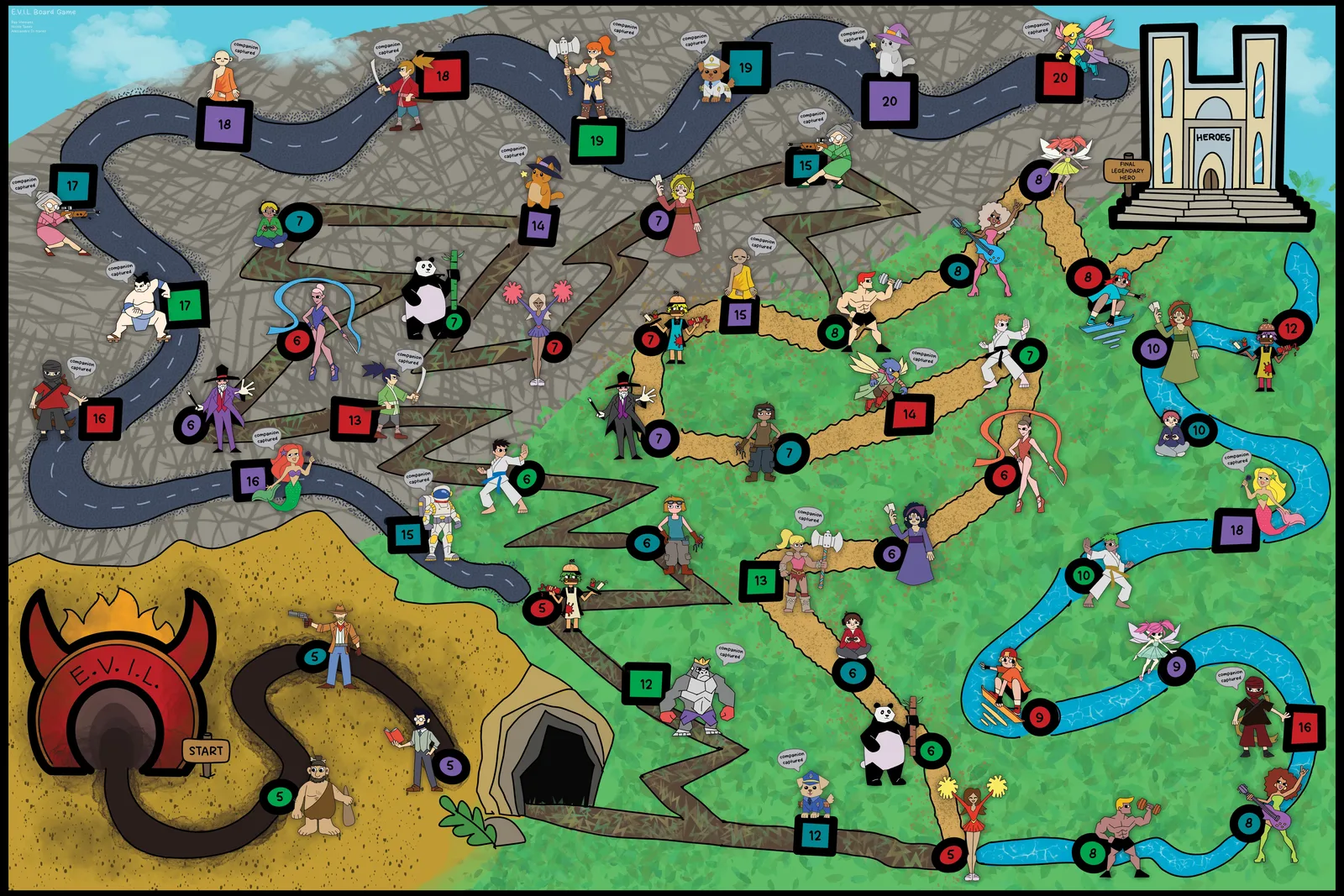
and work together through an organization structure, travelling deeper into hero territory until the
final Legendary Hero. That framing sets the tone and gives the game its dramatic progression.
gameplay summary.
The game is built as a cooperative strategy experience for three players. Each player chooses a villain
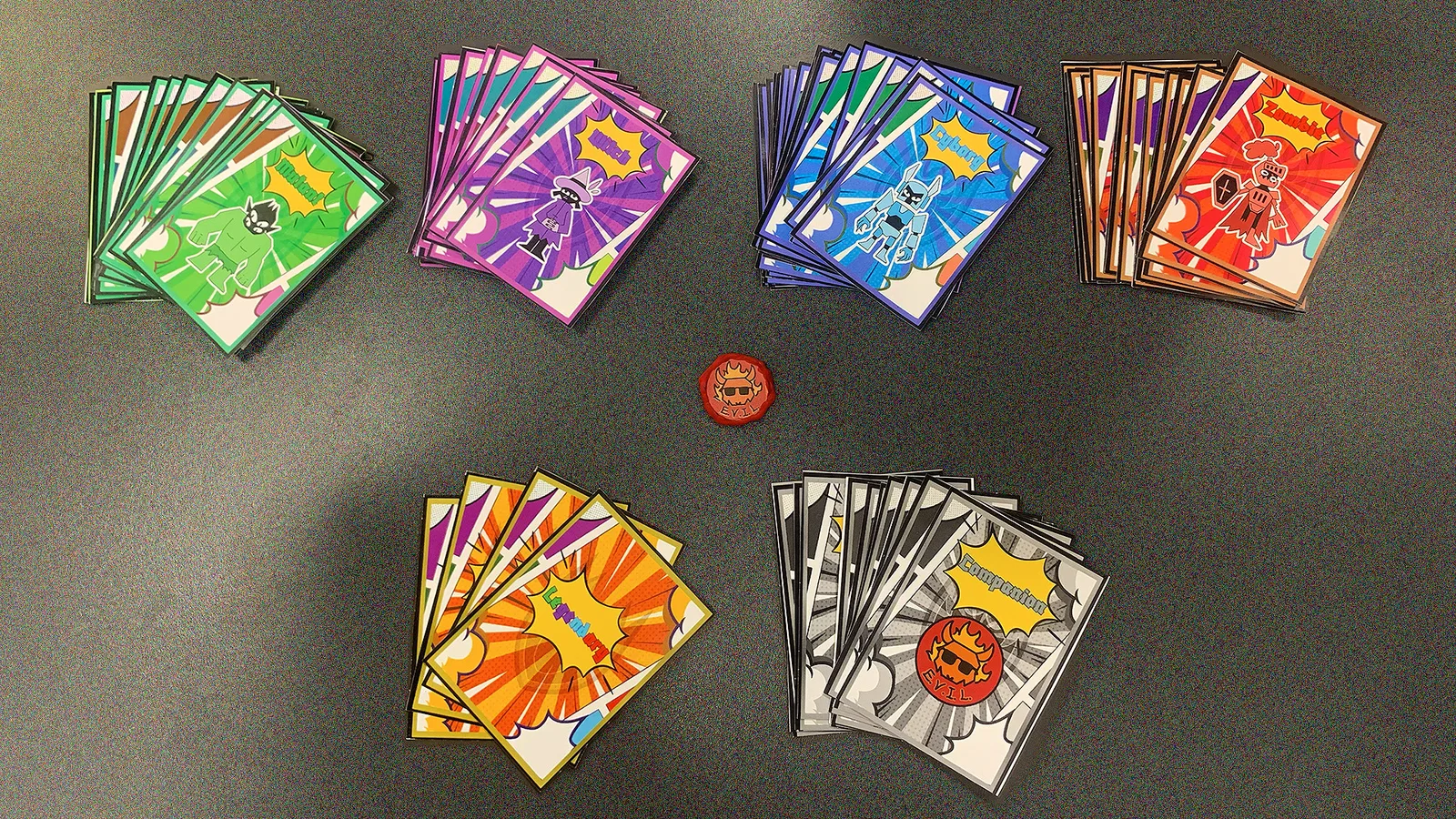
archetype and manages a small deck of ability cards across several power types. Timing matters: cards can
be held, teammates can coordinate, and matching abilities can combine into stronger ultimate attacks.
rules and progression.
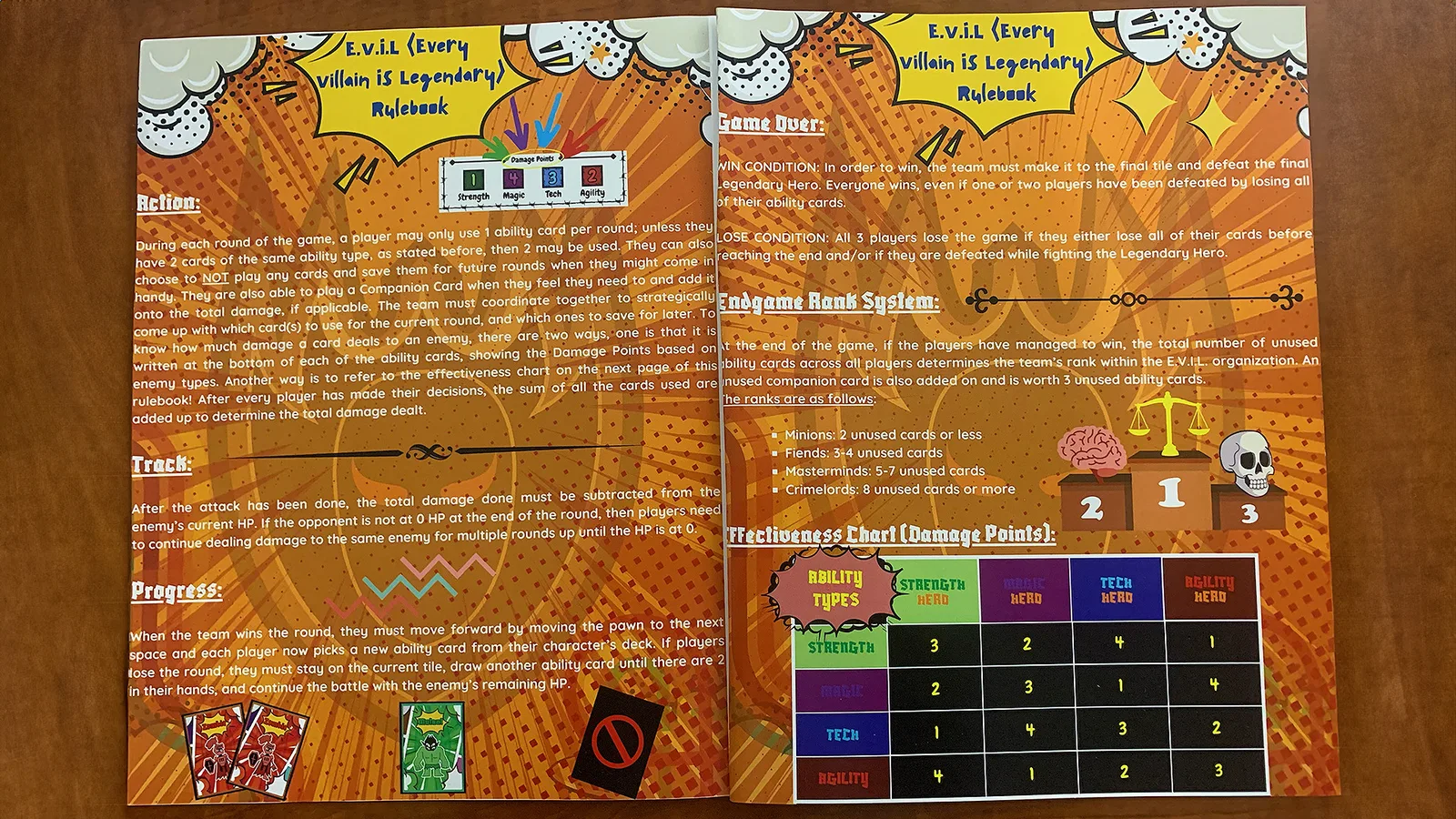
The system uses branching paths, deck management, and progression shaped by wins and setbacks. Victories
move the group forward, while setbacks raise the pressure on future turns. Companion cards and support
effects add texture and create another layer of shared decisions.
role and process.
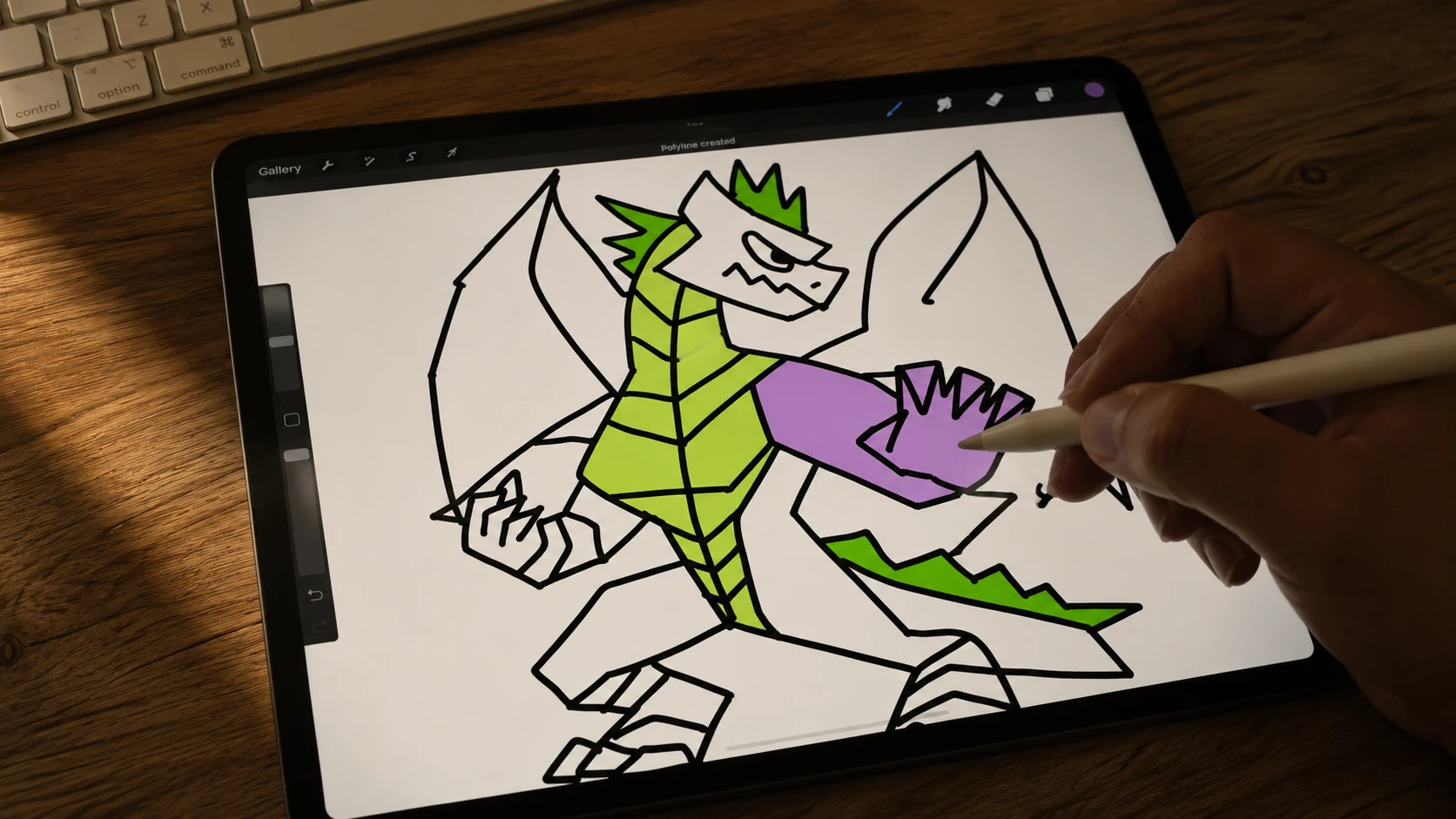
Concept development and systems thinking shaped the project from the start. The work covered the core
pitch, design decisions guided by MDA principles, character sketches, the final board map, written
materials, and balance and pacing adjustments through playtesting. Most of the characters were also
drawn digitally as part of the visual development.
reflection.
E.V.I.L. shows how theme and mechanics become stronger when they grow together. Teamwork, timing, and
visual identity all operate at once, while clear rules keep a complex system easy to understand around
the table.