learn more
E.V.I.L.
World and Concept
E.V.I.L., short for Every Villain Is Legendary, was built around the idea of reversing the usual hero
story. Instead of following heroes, players take on villain roles and work together through an
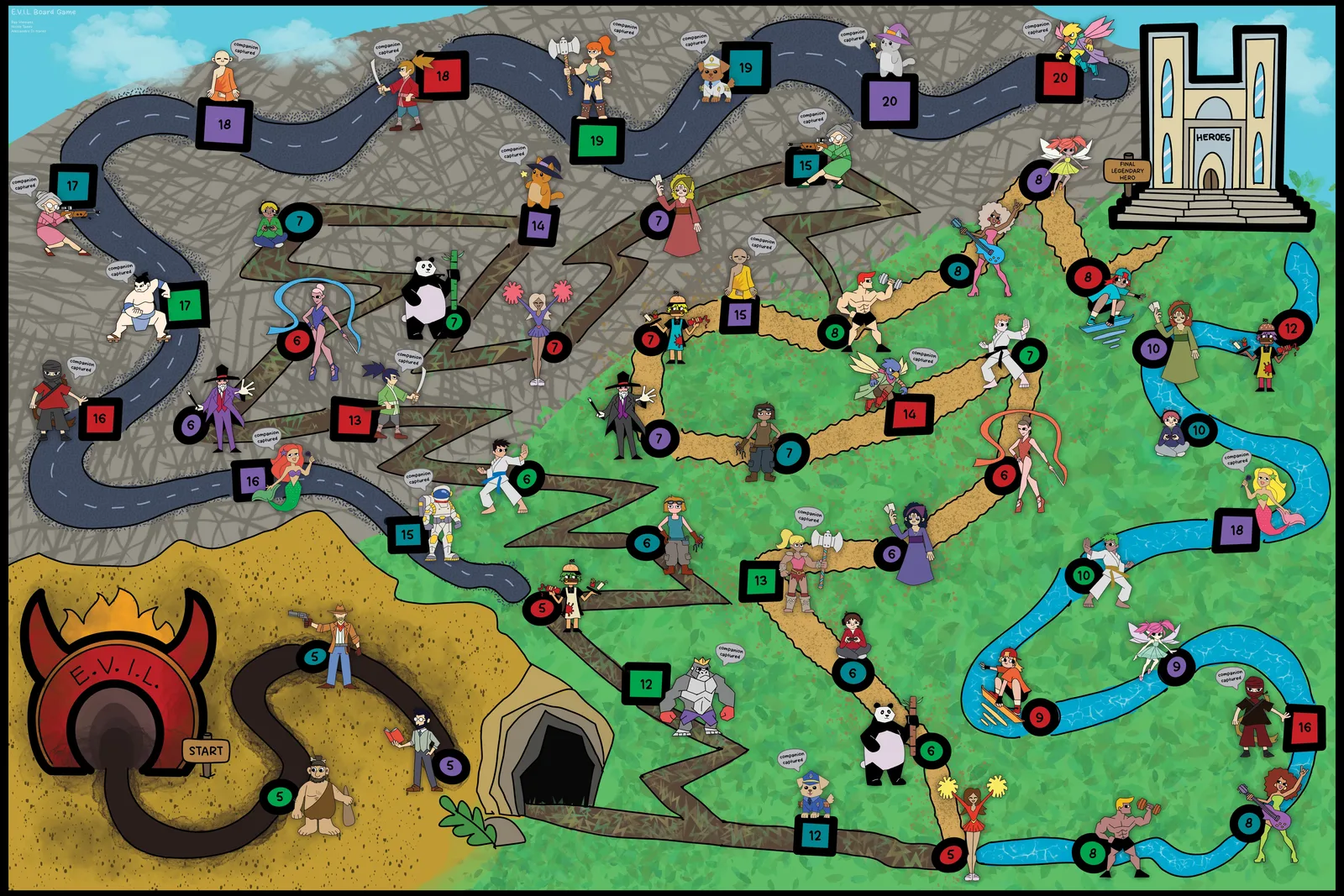
organization structure, travelling deeper into hero territory until they reach a final Legendary
Hero. That narrative framing shaped both the tone and the progression of the game.
Gameplay Summary
The game is built as a cooperative strategy experience for three players. Each player chooses from a
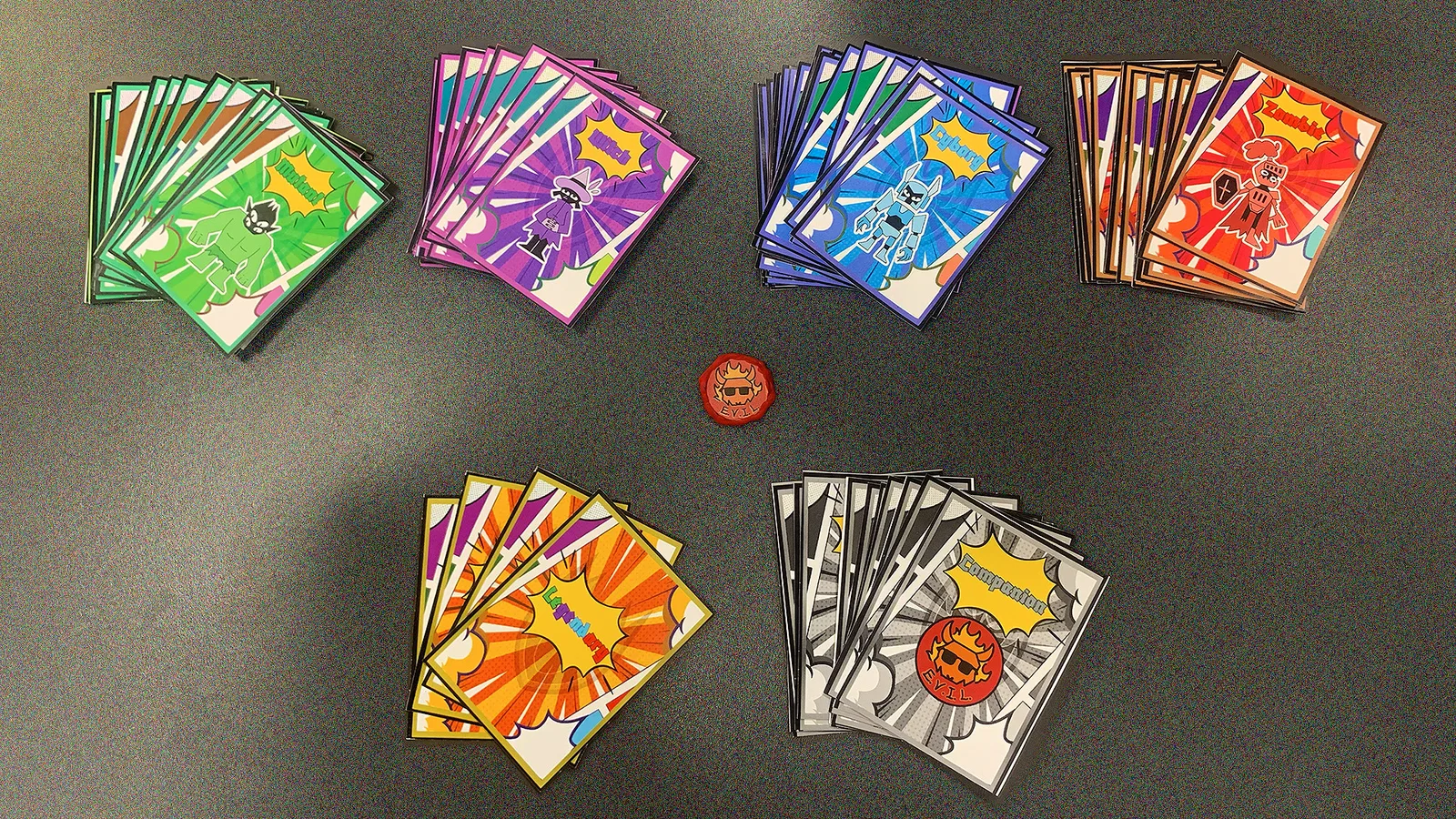
different villain archetype and manages a small deck of ability cards across multiple power types.
Timing matters because players can hold cards, coordinate with teammates, and combine matching
abilities into stronger ultimate-style attacks.
Rules and Progression
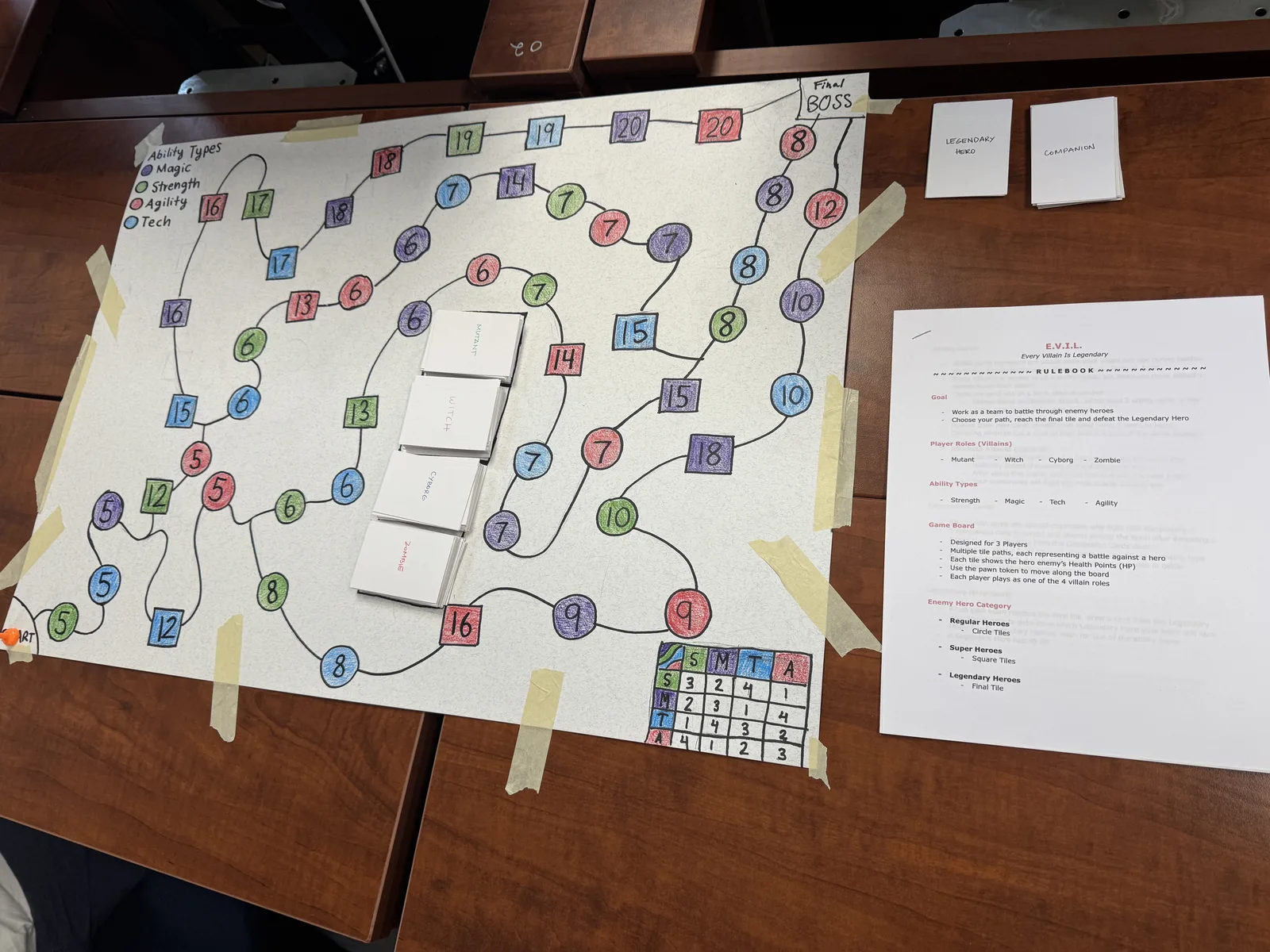
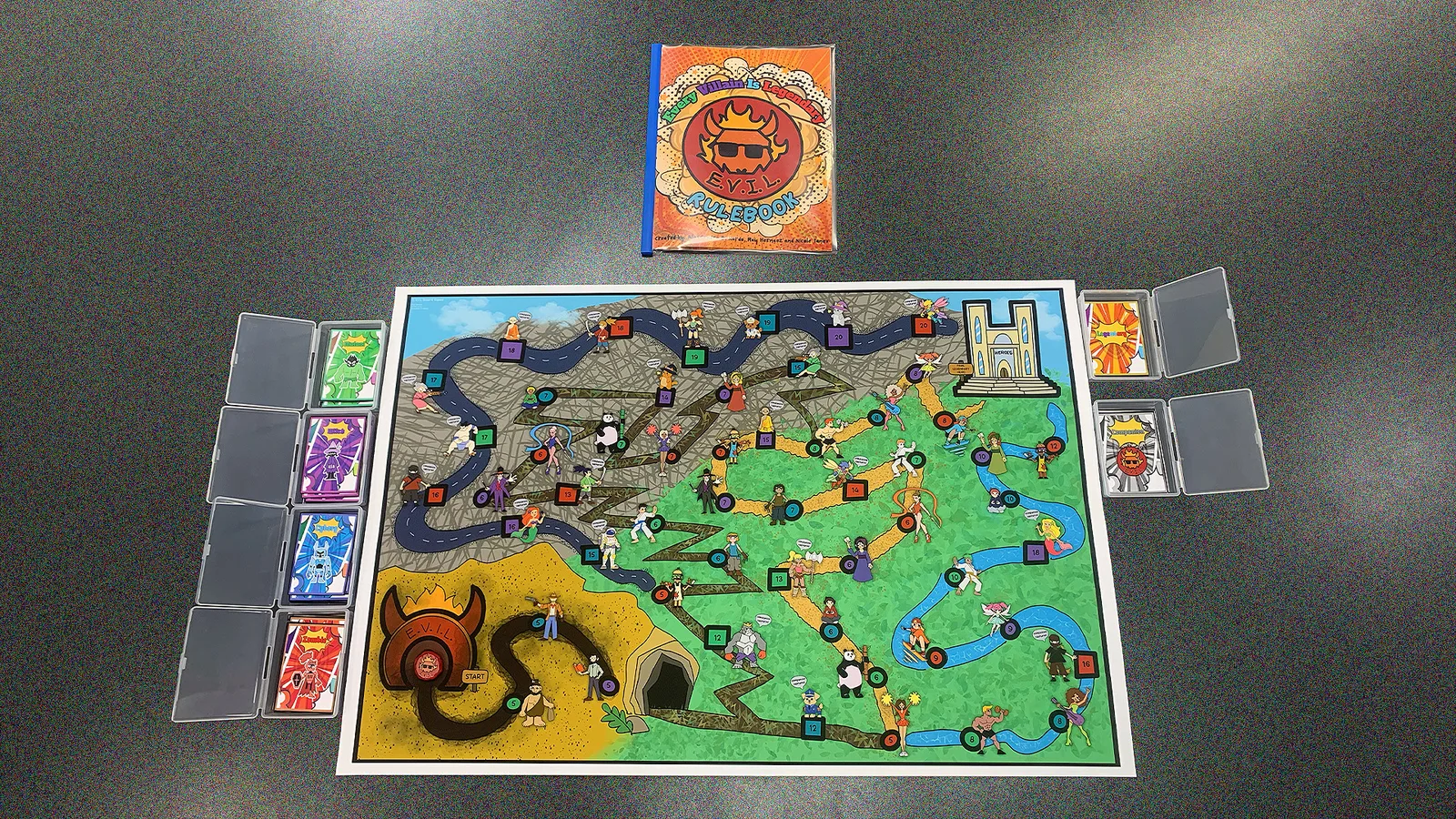
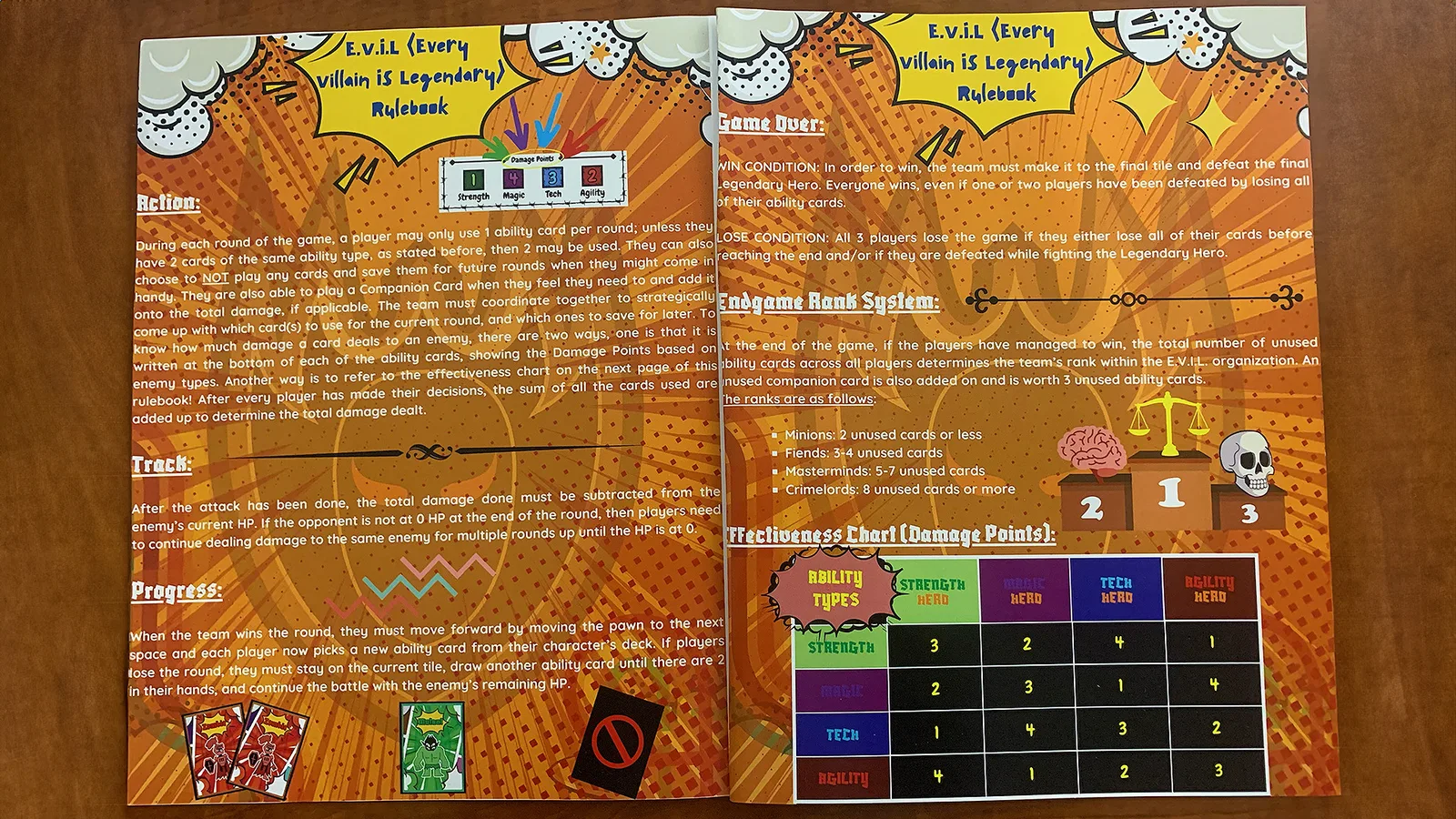
The broader system uses branching paths, deck management, and win-loss progression to shape the flow
of each session. Victories move the group forward, while setbacks hold them in place and increase the
pressure on future turns. Companion cards and support effects give the game more texture and add
another layer of group decision-making.
My Role and Process
I helped lead the concept development and systems thinking behind the project. That included shaping
the core pitch, contributing to the MDA-driven design decisions, sketching characters, designing the
final board map, supporting the written materials, and helping tune balance and pacing through
playtesting.
Reflection
E.V.I.L. taught me a lot about how theme and mechanics can strengthen each other when they are built
together instead of separately. I enjoyed thinking through teamwork, timing, and visual identity all
at once. It also showed me how much clarity matters when you are designing a system players need to
understand quickly at the table.